
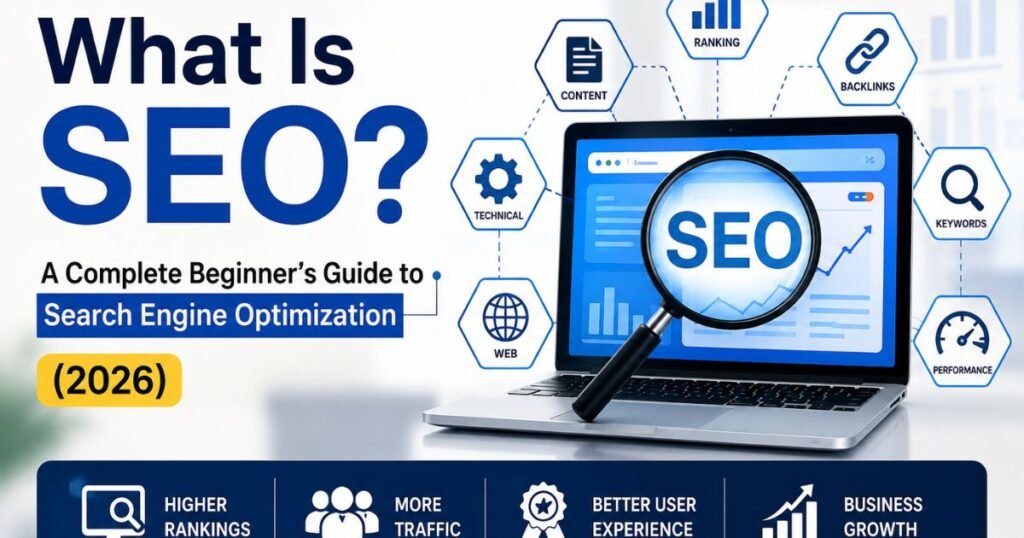
Discover what SEO is, how search engines work, why keyword research matters, and how to reach your target audience with proven SEO strategies that drive long-term organic growth.
Introduction
Every day, billions of people use search engines like Google to find products, services, local businesses, and answers to their questions. Before making a purchase or choosing a service, most users begin with a simple search. What Is SEO? It’s one of the most frequently asked questions by business owners, bloggers, and beginners who want to improve their online presence. Understanding What Is SEO is the first step toward increasing your website’s visibility and attracting more qualified visitors.
According to the latest SEO news, Google’s ranking systems continue to evolve with a stronger focus on helpful content, user experience, and search intent. Modern SEO is no longer about repeating keywords or trying to manipulate rankings. Instead, it focuses on understanding your target audience, creating valuable content, and helping search engines recognize your website as a trusted source of information.
Whether you run a small business, an e-commerce store, or have just started a blog, learning What Is SEO can help you generate consistent organic traffic without relying entirely on paid advertising. From keyword research and content optimization to technical improvements and local SEO, every part of SEO works together to improve your online visibility, increase brand awareness, and drive long-term business growth.
This beginner’s guide to SEO explains everything in simple English. You’ll learn how Google ranks websites, why businesses invest in SEO marketing, and how to build an effective SEO strategy that delivers sustainable results. By the end of this guide, you’ll have a clear understanding of What Is SEO and how to apply proven SEO techniques to grow your website and reach the right audience.
What Is SEO (Search Engine Optimization)?
What Is SEO? Search Engine Optimization (SEO) is the practice of improving a website so it appears higher in search engine results when people search for information, products, or services online. The goal of What Is SEO is not just to achieve a higher Google ranking. Instead, it focuses on connecting your website with the right target audience by providing relevant, helpful, and trustworthy content that answers users’ questions.
Imagine opening a new store in the middle of a busy city without displaying a sign or directions. Even if you offer outstanding products or services, very few people will know your business exists. SEO works in the same way by helping search engines discover, understand, and recommend your website to people actively searching online. When your content matches search intent, Google is more likely to display your pages in Search Engine Results Pages (SERPs), increasing your visibility and attracting qualified visitors.
Today’s Google SEO is much more advanced than it was a few years ago. Modern search engines evaluate content quality, website performance, authority, user engagement, and overall relevance instead of relying only on keywords. Businesses that understand What Is SEO and consistently create valuable, people-first content have a much better chance of achieving higher organic rankings and building long-term trust with both users and search engines.
A successful website SEO strategy combines several important elements, including keyword research, content optimization, technical improvements, mobile responsiveness, page speed, and high-quality backlinks. When these elements work together, they improve your website’s visibility, strengthen its authority, and help you attract sustainable organic traffic that supports long-term business growth.
SEO Definition in Simple Terms
Search Engine Optimization (SEO) is the process of improving your website so it becomes easier for both people and search engines to understand. It involves optimizing your content, website structure, and technical performance to help search engines identify what each page is about and display it for relevant searches. Understanding What Is SEO is essential because it helps your website reach the right audience, improve visibility, and generate consistent organic traffic over time.
For example, when someone searches for “best digital marketing agency in Texas,” Google evaluates millions of webpages before displaying the most relevant results. Websites that publish high-quality SEO content, demonstrate strong authority, and satisfy search intent are more likely to rank at the top of the search results. By understanding What Is SEO, you can create valuable content that attracts your target audience, builds trust, and supports long-term business growth.
Why SEO Is Important for Websites and Businesses
Understanding What Is SEO is important because it helps businesses increase their online visibility and attract people who are actively searching for their products or services. More than half of all website traffic comes from organic search, making SEO one of the most cost-effective digital marketing strategies available. Unlike paid advertising, where traffic stops as soon as your budget runs out, a well-optimized website can continue generating qualified visitors for months or even years.
SEO also builds trust, authority, and long-term credibility. Websites that consistently appear on the first page of Google Search are often viewed as more reliable because users associate higher rankings with quality and expertise. Whether you’re targeting customers across the country or focusing on local SEO, a strong SEO strategy improves brand awareness, reaches the right target audience, increases organic traffic, and creates more opportunities to generate leads, sales, and long-term business growth.
What Does SEO Optimization Mean?
Understanding What Is SEO also means understanding what SEO optimization really involves. Many beginners assume SEO is simply about adding keywords to a webpage, but modern optimization goes far beyond that. It focuses on improving every aspect of your website so both visitors and search engines can easily understand, navigate, and interact with your content. A well-optimized website delivers a better user experience while increasing its chances of ranking higher in search engine results.
Successful SEO optimization begins with understanding your target audience. Before creating any content, businesses perform thorough keyword research to identify what people are searching for, the questions they need answered, and the topics that matter most. This approach helps create valuable, relevant content instead of relying on guesswork, making it easier to attract qualified visitors and increase organic traffic.
SEO optimization also includes improving the technical foundation of your website. Fast-loading pages, secure HTTPS connections, clear website architecture, mobile-friendly design, and easy navigation help visitors browse your website while allowing Google to crawl and index your pages more efficiently. These improvements support better performance in Google Search and contribute to long-term SEO success.
Rather than chasing quick ranking tricks, effective SEO focuses on delivering long-term value. Publishing helpful, accurate, and regularly updated content builds trust with both users and search engines over time. Businesses that invest in SEO marketing and continuously improve their websites are more likely to achieve sustainable growth, stronger visibility, and higher rankings than those relying solely on paid advertising.
Understanding Search Engine Optimization
To fully understand What Is SEO, it’s important to know how search engines discover and organize information. Search engines use automated programs called crawlers or bots to scan websites across the internet. These crawlers analyze page titles, headings, images, internal links, and written content before storing the information in a massive search index. When a user performs a search in Google Search, Google’s algorithm evaluates billions of indexed pages and displays the most relevant and helpful results based on search intent, content quality, and website authority.
Every improvement you make helps search engines understand your website more effectively. Creating valuable content, performing thorough keyword research, improving page speed, strengthening internal linking, and optimizing your website’s structure all contribute to better visibility in search engine results. Understanding What Is SEO allows you to build a website that is easier to crawl, easier to index, and more likely to attract consistent organic traffic from your target audience over the long term.
Why Optimization Matters for Google Rankings
Understanding What Is SEO is only the beginning. Knowing how to optimize your website is what helps you achieve better Google Search rankings. Google’s primary goal is to provide users with the most relevant, accurate, and helpful answer for every search query. Websites that deliver high-quality content, fast loading speeds, a positive user experience, and content that matches search intent are far more likely to outperform poorly optimized competitors in search engine results.
SEO optimization also improves how visitors interact with your website. When users spend more time reading your content, explore additional pages, and find the information they need, they send positive engagement signals to Google. These signals help strengthen your website’s authority, increase organic traffic, and improve long-term visibility. By understanding What Is SEO and applying proven optimization techniques, you can build a website that serves both your target audience and search engines, leading to higher rankings and sustainable business growth.
How Does SEO Work?
SEO works through a continuous process that helps search engines discover, understand, and rank your website. Every time you publish or update a page, search engines analyze its content to determine whether it provides useful information for users. Modern SEO focuses on delivering value rather than simply adding keywords. Recent SEO news shows that Google rewards websites offering helpful, accurate, and trustworthy content.
The SEO process consists of three major stages: crawling, indexing, and ranking. During these stages, Google Search evaluates hundreds of signals to determine which pages best answer a user’s query. Websites that regularly publish valuable content, perform effective keyword research, and understand their target audience are more likely to earn higher rankings and generate consistent organic traffic.
How Search Engines Crawl Websites
Crawling is the first step in SEO. Automated programs called search engine crawlers, including Googlebot, visit websites by following internal and external links. These bots examine your page titles, headings, images, and content to understand what every page is about. A well-organized website makes crawling easier and improves your chances of being discovered quickly.
A strong website structure also helps crawlers reach important pages without difficulty. Broken links, poor navigation, or orphan pages can slow the crawling process and prevent valuable content from being discovered. Creating a logical website structure helps both users and search engines navigate your site efficiently.
To learn more about how Google crawls, indexes, and ranks websites, you can visit Google Search Central, where Google provides official SEO documentation and best practices.
How Search Engines Index Pages
Once a page has been crawled, Google decides whether it should be added to its search index. Indexing means storing your webpage in Google’s database so it can appear in search results. Pages with original content, clear headings, and useful information are far more likely to be indexed successfully.
Technical issues such as duplicate content, incorrect settings, or poor website structure can stop pages from being indexed. Submitting an XML sitemap through Google Search Console and updating your content regularly encourages search engines to revisit your website and discover new pages faster.
How Google Ranks Websites
After indexing, Google’s ranking systems compare your page with thousands of other pages targeting the same search query. The algorithm evaluates content quality, website authority, page speed, backlinks, relevance, and user experience before deciding where your page should appear in search results.
Google no longer ranks pages based only on keywords. Instead, it evaluates search intent, topical relevance, and how effectively your content answers a user’s question. Businesses that understand their target audience and consistently publish valuable information usually achieve stronger rankings than those relying on outdated SEO tactics.
What Are the Most Important SEO Ranking Factors?
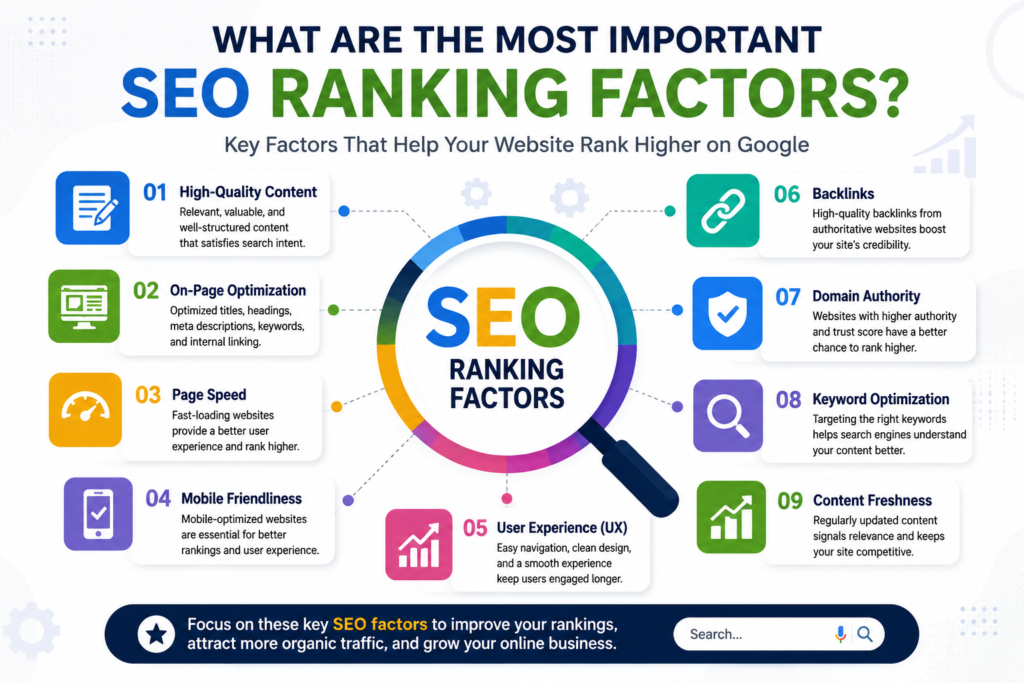
Google uses hundreds of ranking signals to determine where websites appear in search results. While no one outside Google knows every ranking factor, several elements consistently influence website performance. Understanding these factors allows you to build a long-term SEO strategy that supports sustainable growth instead of short-term gains.
According to recent SEO news, Google continues rewarding websites that prioritize helpful content, technical excellence, and user satisfaction. Strong keyword research, fast-loading pages, quality backlinks, and a positive user experience all contribute to higher visibility and improved organic rankings.
| SEO Ranking Factor | Why It Matters |
| High-Quality Content | Answers user questions and satisfies search intent |
| Keyword Research | Helps target the right audience |
| Backlinks | Builds trust and authority |
| Website Speed | Improves user experience |
| Mobile Optimization | Supports mobile-first indexing |
| Internal Linking | Helps search engines discover pages |
| Technical SEO | Improves crawling and indexing |
High-Quality Content
High-quality content remains the foundation of every successful SEO campaign. Google rewards websites that publish original, accurate, and informative articles that solve real problems. Instead of writing only for rankings, focus on creating content that genuinely helps your readers and answers their questions clearly.
Publishing fresh content consistently also strengthens your topical authority. Over time, search engines recognize your website as a reliable resource, increasing your chances of ranking for competitive keywords.
Relevant Keywords
Keywords help search engines understand the main topic of your content. Effective keyword research allows you to discover what your audience is searching for and create content that matches those searches naturally. Long-tail keywords often attract highly targeted visitors with stronger buying intent.
Avoid keyword stuffing because modern search engines understand context and related terms. Writing naturally while covering the topic in depth produces better long-term results than repeating the same phrase throughout a page.
Backlinks and Website Authority
Backlinks remain one of Google’s strongest trust signals. When respected websites link to your content, they indicate that your information is useful and credible. A few high-quality backlinks often provide more value than hundreds of low-quality links.
Building website authority takes time. Publishing useful guides, original research, and valuable resources encourages other websites to reference your content naturally, helping your rankings improve over time.
Page Experience and Core Web Vitals
A great article isn’t enough if your website is slow or difficult to use. Google measures loading speed, responsiveness, and visual stability through Core Web Vitals because these factors directly affect user satisfaction. Fast websites keep visitors engaged and reduce bounce rates.
Optimizing images, choosing reliable hosting, and reducing unnecessary scripts improve page performance. Better page experience not only supports SEO but also increases conversions and visitor engagement.
Mobile-Friendly Design
Most internet users browse websites from smartphones, making mobile optimization essential. Google primarily evaluates the mobile version of your website when determining rankings, so responsive design is no longer optional.
A mobile-friendly website should load quickly, display correctly on every screen size, and provide simple navigation. Whether visitors find your website through Google Search, Local SEO, or social media, a smooth mobile experience increases engagement and encourages users to explore more pages.
Conclusion
SEO is no longer just a marketing trend. It has become one of the most effective ways to build long-term online visibility and attract people who are actively searching for your products, services, or information. Whether you own a small business, manage an e-commerce store, or run a personal blog, learning the fundamentals of SEO gives you a competitive advantage in today’s digital world.
The key to successful SEO is understanding your target audience and creating content that genuinely solves their problems. Strong keyword research, helpful articles, a well-structured website, and a positive user experience all work together to improve your rankings. At the same time, keeping up with the latest SEO news and Google’s algorithm updates helps you adapt your strategy as search technology continues to evolve.
Remember that SEO is a long-term investment rather than a quick solution. Search engines reward websites that consistently publish valuable content, maintain technical excellence, and build trust over time. Instead of looking for shortcuts, focus on providing accurate information, improving your website regularly, and creating content that people genuinely want to read and share.
If you continue applying the strategies covered in this guide, you’ll build a stronger online presence, increase organic traffic, and create lasting growth for your website. The sooner you start optimizing your content, the sooner you’ll begin building authority and earning better visibility in search results.
Frequently Asked Questions (FAQs)
What is SEO in simple words?
SEO, or Search Engine Optimization, is the process of improving a website so it appears higher in search engine results. It helps attract more organic visitors by making your content useful, relevant, and easy for search engines to understand.
How does SEO work?
SEO works through three main steps: crawling, indexing, and ranking. Search engines discover your pages, store them in their database, and rank them based on content quality, relevance, authority, and user experience.
What are the four types of SEO?
The four primary types of SEO are On-Page SEO, Off-Page SEO, Technical SEO, and Local SEO. Each type focuses on a different aspect of improving your website’s visibility and search performance.
Is SEO free?
Organic SEO doesn’t require paying Google for rankings. However, achieving good results often requires time, quality content, consistent optimization, and sometimes investment in professional SEO tools or expert services.
How long does SEO take to show results?
Most websites begin seeing measurable improvements within three to six months. Highly competitive industries may take six to twelve months, depending on your content quality, competition, and overall SEO strategy.
Can beginners learn SEO?
Yes. Anyone can learn SEO by understanding the basics, practicing keyword research, creating helpful content, and improving their website step by step. With consistency and patience, beginners can build the skills needed to achieve long-term SEO success.