
Search Engine Optimization (SEO) is one of the most important parts of building a successful website. A well-optimized website can attract more visitors from search engines, improve online visibility, and help a business reach the right audience. However, SEO involves many tasks, including keyword research, competitor analysis, technical audits, content optimization, backlink analysis, and performance tracking.
This is where SEO tools become extremely useful. The right tools can save time, identify problems, provide valuable insights, and help you create a more effective SEO strategy.
What Are SEO Tools?
SEO tools are online platforms or software designed to help website owners, marketers, and SEO professionals improve their search engine performance. They provide useful data about keywords, website traffic, backlinks, rankings, technical issues, and competitors.
Instead of making SEO decisions based on guesswork, these tools allow you to use real data to understand what is working and what needs improvement.
Why Are SEO Tools Important?
SEO can be difficult to manage manually, especially when a website has many pages and keywords. SEO tools make the process easier by collecting and analyzing important information.
They can help you:
- Find valuable keywords
- Analyze competitors
- Discover technical SEO problems
- Monitor keyword rankings
- Check backlinks
- Improve website content
- Track organic traffic
- Identify opportunities for growth
Using these tools consistently can make your SEO strategy more organized and effective.
Best SEO Tools for Effective Search Engine Optimization
There are many SEO platforms available today, and each one offers different features. Here are some popular tools that can support different areas of SEO.
1. Google Search Console
Google Search Console is one of the most useful tools for website owners. It helps you understand how your website performs in Google Search.
You can use it to check search queries, impressions, clicks, indexing issues, and page performance. It can also alert you to certain technical problems that may affect your website’s visibility.
For anyone serious about SEO, Google Search Console is an essential starting point.
2. Google Analytics
Google Analytics helps you understand how visitors interact with your website. You can monitor traffic sources, user behavior, engagement, and conversions.
When combined with other SEO data, analytics can help you determine whether your organic search traffic is bringing valuable visitors to your website.
3. Ahrefs
Ahrefs is a popular SEO platform known for its backlink analysis, keyword research, competitor research, and site auditing features.
It can help you discover keywords that competitors are ranking for and analyze websites linking to your competitors. This information can be useful when developing a content and link-building strategy.
4. Semrush
Semrush is an all-in-one digital marketing platform with a wide range of SEO features. It can be used for keyword research, competitor analysis, site audits, rank tracking, and content optimization.
One of its major advantages is that it brings many SEO functions together in one platform, making it useful for agencies, businesses, and experienced marketers.
5. Ubersuggest
Ubersuggest is a beginner-friendly SEO tool that can help with keyword research, content ideas, competitor analysis, and basic website auditing.
It can be a good option for users who are learning SEO and want straightforward information without dealing with a highly complicated interface.
6. Screaming Frog SEO Spider
Technical SEO is an important part of website optimization, and Screaming Frog SEO Spider is particularly useful for analyzing website structure.
It can help identify issues such as broken links, missing titles, duplicate content, redirects, and other technical problems. This makes it valuable for larger websites where manually checking every page would take considerable time.
7. Yoast SEO
For WordPress websites, Yoast SEO is a widely used plugin that helps with on-page optimization. It provides guidance for titles, meta descriptions, content structure, XML sitemaps, and other SEO-related settings.
While a plugin cannot guarantee higher rankings, it can make many basic SEO tasks easier to manage.
How to Choose the Right SEO Tool
The best SEO tool depends on your specific goals. You do not necessarily need to subscribe to every platform available.
If your main goal is keyword research, choose a tool with strong keyword databases and search-intent insights. If you are focused on technical SEO, look for a platform with detailed site-audit capabilities.
For competitor analysis, backlink data and competitor keyword research can be particularly valuable. Meanwhile, website owners who are just starting may prefer simpler and more affordable tools.
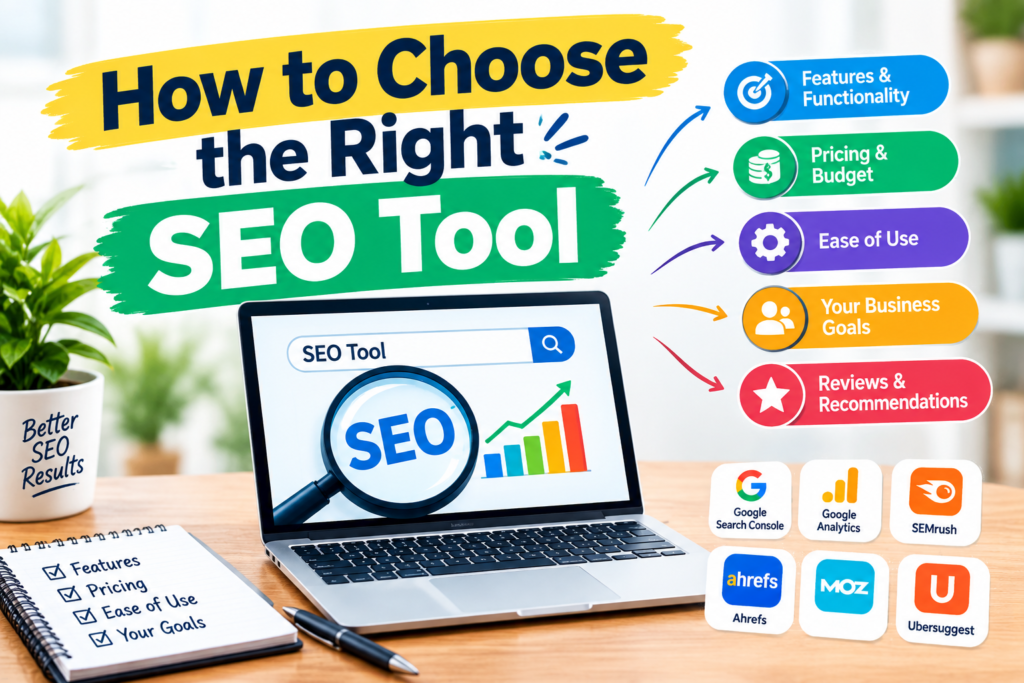
Before choosing a tool, consider:
- Your SEO goals
- Website size
- Available budget
- Level of SEO experience
- Required features
- Reporting needs
- Keyword and backlink data
How to Use SEO Tools Effectively
Simply having access to an SEO tool does not automatically improve your rankings. The important thing is how you use the information.
Start by identifying your main SEO goals. Then use keyword research to understand what your audience is searching for. Review your existing content and find pages that could be improved.
Next, perform a technical audit to identify problems that may prevent search engines from properly crawling or understanding your website. Monitor your rankings and organic traffic regularly, and compare your performance with competitors.
Most importantly, use SEO tools to support your decisions rather than blindly following every recommendation they provide.
SEO Tools and Content Optimization
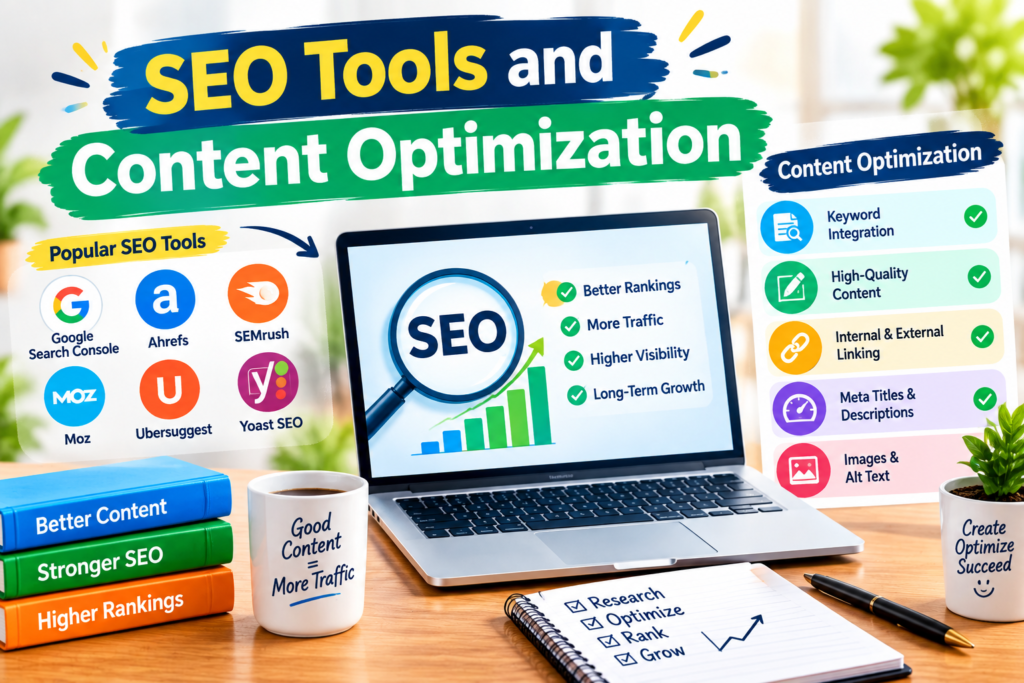
High-quality content remains an important part of SEO. SEO tools can help you identify relevant keywords, related topics, search intent, and content gaps.
However, keywords should be used naturally. Avoid stuffing the same phrase repeatedly into an article simply to increase keyword frequency. Instead, focus on creating useful content that directly answers the reader’s questions.
A good combination of keyword research, clear headings, useful information, internal linking, and natural language can create content that is valuable to both users and search engines.
Final Thoughts
The right SEO tools can make Search Engine Optimization faster, more organized, and more data-driven. From Google Search Console and Google Analytics to platforms such as Ahrefs, Semrush, Ubersuggest, and Screaming Frog, each tool can help with a different part of the SEO process.
The goal is not to use every available tool. Instead, choose the tools that match your website’s needs and use their insights to make better SEO decisions.
For businesses that want to improve their online presence, a consistent SEO strategy combined with reliable tools can help increase visibility, attract relevant traffic, and create long-term growth.