
Introduction
The way businesses attract customers has changed significantly over the past few years. Traditional marketing methods such as newspaper advertisements, banners, television commercials, and printed promotions are no longer the only ways to reach potential customers. Today, millions of people use search engines, social media platforms, websites, and online marketplaces to discover products and services. This change has made digital marketing an essential part of modern business growth.
An online marketing agency helps businesses build their presence on the internet, connect with their target audience, generate qualified leads, and increase sales. Whether a company operates locally or serves customers internationally, having a well-planned online marketing strategy can make a significant difference.
From search engine optimization and social media marketing to paid advertising, content creation, and website development, online marketing agencies provide different services to help businesses achieve their goals.
However, choosing the right marketing approach is not simply about publishing social media posts or running advertisements. It requires research, planning, creativity, technical knowledge, and continuous performance analysis.
Understanding how an online marketing agency works can help business owners make better marketing decisions and build a stronger digital presence.
What Is an Online Marketing Agency?
An online marketing agency is a professional company that helps businesses promote their products, services, and brands through digital platforms.
Unlike traditional advertising agencies that mainly focus on offline promotional activities, online marketing agencies use internet-based strategies to reach potential customers.
Their primary objective is to help businesses attract the right audience, increase brand awareness, improve website traffic, generate inquiries, and achieve measurable business results.
For example, a local restaurant may want more customers from nearby areas. A marketing agency can improve its Google Business Profile, optimize its website for local search terms, and create social media campaigns to attract people searching for restaurants in that location.
Similarly, an international e-commerce company may need search engine optimization, content marketing, and paid advertising to reach customers in different countries.
The strategy depends on the business model, target audience, industry, competition, and marketing budget.
How Does an Online Marketing Agency Work?
An online marketing agency usually begins by understanding a client’s business and identifying what they want to achieve.
Some businesses want more website visitors, while others want more sales, qualified leads, phone calls, or brand recognition.
The agency studies the existing digital presence and identifies opportunities for improvement. This may include reviewing the website, analyzing competitors, researching relevant keywords, checking social media accounts, and evaluating current marketing performance.
Once the research is complete, the agency develops a marketing strategy based on the client’s goals.
For example, a company that wants to increase organic website traffic may benefit from SEO and content marketing. A business launching a new product may need social media campaigns and paid advertisements to generate immediate attention.
After implementing the strategy, the agency monitors performance using analytics tools and prepares reports to understand what is working and where improvements are needed.
Digital marketing is an ongoing process. Search engine rankings, customer behavior, market trends, and competitors continue to change, so marketing strategies must be reviewed and improved regularly.
Important Services Offered by an Online Marketing Agency
A professional online marketing agency may provide several services depending on its expertise and the needs of its clients.
Search Engine Optimization (SEO)
Search engine optimization is one of the most important services offered by digital marketing agencies. SEO focuses on improving a website’s visibility in organic search engine results.
When people search for products, services, or information on Google, they usually visit websites that appear relevant to their queries. SEO helps businesses improve their chances of appearing in these search results.
A complete SEO strategy involves understanding search intent, researching keywords, improving website content, optimizing technical performance, and building website authority.
On-Page SEO
On-page SEO focuses on optimizing individual website pages. It includes improving title tags, meta descriptions, headings, URLs, internal links, images, and website content.
The purpose is to help search engines understand the topic of each page while making the content useful and easy to navigate for visitors.
Off-Page SEO
Off-page SEO involves activities outside the website that can help strengthen its authority and reputation.
Link building, digital PR, brand mentions, and relevant guest posting are common off-page SEO practices.
Quality matters more than quantity. Relevant backlinks from trustworthy websites can support a website’s authority, while manipulative link-building practices can create risks.
Technical SEO
Technical SEO focuses on the technical structure and performance of a website.
It includes improving website speed, mobile usability, crawlability, indexing, structured data, XML sitemaps, and resolving technical errors.
A technically accessible website makes it easier for search engines to discover and understand its content.
Local SEO
Local SEO helps businesses appear in search results when people look for products or services in a specific geographical area.
It includes Google Business Profile optimization, local keyword research, business information consistency, customer reviews, and location-based website content.
This service is particularly useful for restaurants, hotels, clinics, real estate agencies, repair services, and other businesses that serve customers in specific locations.
Social Media Marketing
Social media marketing helps businesses connect with potential customers through platforms such as Facebook, Instagram, LinkedIn, TikTok, and Pinterest.
An online marketing agency can develop a social media strategy based on the target audience and business objectives.
This may involve creating professional posts, designing promotional graphics, publishing videos, managing social media accounts, and planning campaigns.
Social media marketing is not only about gaining followers. A successful strategy focuses on building trust, encouraging engagement, communicating brand values, and directing interested users toward relevant products or services.
For example, a clothing brand can use Instagram to showcase new collections, share customer experiences, and promote seasonal offers.
A B2B company may use LinkedIn to establish industry authority, share professional insights, and connect with potential business partners.
Website Development and Design
A website is often the first place where potential customers learn about a business.
If a website looks outdated, loads slowly, or provides confusing information, visitors may leave without contacting the company.
Online marketing agencies may offer website development and design services to create professional, user-friendly websites.
A good business website should communicate the company’s services clearly, work smoothly on mobile devices, load efficiently, and provide simple navigation.
It should also include important elements such as service pages, contact information, clear calls to action, and relevant content.
Website development and SEO work well together because a professionally designed website provides a strong foundation for long-term organic growth.
Content Marketing
Content marketing involves creating valuable and relevant information to attract and engage a target audience.
It includes blog articles, website service pages, industry guides, case studies, infographics, and other educational resources.
For example, an accounting agency may publish articles about business taxes, financial planning, and accounting software.
This content can help potential customers understand common problems while introducing the company’s expertise.
Effective content marketing should answer real questions rather than simply repeat keywords. It should provide accurate information, clear explanations, and practical value.
Paid Advertising and PPC
Paid advertising allows businesses to reach potential customers through sponsored placements on digital platforms.
Google Ads, Facebook Ads, Instagram Ads, and LinkedIn Ads are popular advertising channels.
Pay-per-click advertising allows businesses to pay when users click on their advertisements, although pricing models vary across platforms and campaign types.
An agency can help with audience research, campaign planning, advertisement creation, budget management, conversion tracking, and performance optimization.
Paid advertising can generate visibility faster than organic SEO, but results depend on the quality of the campaign, competition, landing pages, and available budget.
Businesses should also understand that advertising traffic may stop when campaigns are paused.
Guest Posting and Link Building
Guest posting is a content marketing and SEO approach in which a business publishes relevant articles on other websites.
These articles may introduce the brand to a new audience and, where editorially appropriate, include a link to the business website.
An online marketing agency may research publishing opportunities, contact website owners, negotiate placements, prepare content, and monitor published articles.
However, businesses should avoid focusing only on website metrics such as Domain Rating or Domain Authority.
Website relevance, genuine readership, editorial standards, traffic quality, and link placement are important considerations.
A sustainable link-building strategy should focus on building a credible online reputation rather than collecting large numbers of unrelated backlinks.
Why Do Businesses Need an Online Marketing Agency?
Modern customers often research a company online before making a purchasing decision. They may compare different service providers, read reviews, visit websites, and check social media profiles.
Without a strong digital presence, even a business with excellent products or services may struggle to attract new customers.
An online marketing agency helps businesses develop a consistent strategy instead of depending on random promotional activities.
Improved Online Visibility
SEO, content marketing, social media, and paid advertising can help businesses become more visible to their target audience.
A stronger online presence increases the opportunities for potential customers to discover a company’s services.
More Qualified Leads
Not every website visitor is a potential customer.
A well-planned marketing strategy focuses on attracting people who are genuinely interested in the products or services being offered.
Keyword research, audience targeting, relevant content, and optimized landing pages can help improve lead quality.
Better Brand Awareness
Consistent branding across websites, social media platforms, and search results helps businesses become recognizable.
When customers repeatedly encounter useful information and professional communication from a company, they may become more familiar with its brand.
Time and Resource Management
Managing digital marketing requires time, experience, and access to different tools.
Working with an agency allows business owners to focus on their operations while marketing professionals handle research, implementation, content, and performance monitoring.
Measurable Marketing Performance
Digital marketing provides access to useful performance data.
Businesses can evaluate website traffic, keyword rankings, impressions, clicks, leads, conversions, and advertising performance.
This information helps agencies identify opportunities and make informed decisions about future campaigns.
How to Choose the Right Online Marketing Agency
Choosing a marketing agency is an important business decision. The right agency should understand your goals and explain how its services can support your growth.
Review Its Experience and Expertise
Start by understanding the agency’s main services and areas of expertise.
Some agencies specialize in SEO, while others focus on social media, paid advertising, website development, or complete digital marketing solutions.
Choose a company whose experience matches your requirements.
Check Its Website and Online Presence
A professional agency should have a clear website explaining its services, business information, and contact details.
Review its website quality, content, social media activity, and overall communication.
An agency’s online presence can provide useful information about how it presents its own brand.
Ask About Its Marketing Strategy
Before starting a project, ask how the agency plans to approach your business.
A reliable agency should be able to explain its research process, expected activities, reporting methods, and performance indicators.
Be cautious of companies that promise guaranteed first-page Google rankings or instant results without understanding your website and competition.
Understand Pricing and Deliverables
Marketing costs vary according to project size, industry competition, services, and campaign requirements.
Ask for a clear explanation of what is included in the package.
For SEO projects, this may include website audits, keyword research, technical recommendations, content optimization, link-building activities, and monthly reporting.
Understanding the deliverables helps prevent confusion later.
Communication and Reporting
Good communication is essential for a successful agency-client relationship.
The agency should provide regular updates, explain completed work, discuss challenges, and share meaningful performance reports.
Clients should understand what is happening with their marketing campaigns rather than receiving unclear promises.
Essential Tools Used by Online Marketing Agencies
Professional marketing agencies use different tools to research, manage, and analyze campaigns.
The tools depend on the services being provided.
Google Analytics 4 helps agencies understand website visitors, traffic sources, user behavior, and conversions.
Google Search Console provides information about search performance, indexing, impressions, clicks, and website search queries.
Ahrefs and Semrush are commonly used for keyword research, competitor analysis, backlink research, and SEO monitoring.
Screaming Frog helps identify technical website issues, broken links, missing metadata, and other on-page problems.
Google Keyword Planner can help with keyword research and advertising planning.
Canva is useful for creating social media graphics and promotional designs, while WordPress is widely used for website development and content management.
Using professional tools can improve research and workflow efficiency. However, tools alone do not guarantee successful marketing. Results depend on how effectively professionals interpret the data and implement appropriate strategies.
Online Marketing Agency vs. Hiring an In-House Marketing Team
Businesses often consider whether they should hire an in-house marketing team or work with an external agency.
Both options have advantages.
An in-house team works directly within the company and may have a deeper understanding of its products, internal operations, and daily business requirements.
An external marketing agency provides access to professionals with experience across different industries and marketing channels.
For small businesses and startups, working with an agency can be more practical than hiring multiple full-time specialists.
For larger companies with ongoing and complex marketing requirements, an in-house team may offer greater control over daily activities.
Some businesses choose a combination of both approaches, keeping internal marketing management while outsourcing specialized services such as technical SEO, website development, or paid advertising.
The best option depends on the company’s budget, workload, expertise, and long-term objectives.
The Future of Online Marketing Agencies
Digital marketing continues to evolve as technology, customer expectations, and search behavior change.
Artificial intelligence is becoming an important part of marketing research, content production, customer support, and data analysis.
AI-powered tools can help agencies identify trends, generate content ideas, analyze large datasets, and improve workflow efficiency.
However, human expertise remains important for strategy, creativity, fact-checking, brand communication, and understanding customer needs.
Search engines are also becoming more focused on content quality, relevance, and user experience.
Businesses need websites that provide accurate information and genuinely help visitors.
Video content, personalized marketing, local search, influencer collaborations, and data-driven advertising are also creating new opportunities for businesses.
Agencies that continue learning and adapting to these changes will be better positioned to support their clients.
The future of digital marketing is not simply about using more tools. It is about understanding people, providing useful information, building trust, and creating meaningful customer experiences.
How to Start an Online Marketing Agency
Starting an online marketing agency can be an opportunity for professionals who have practical digital marketing skills and understand business needs.
A successful agency begins with a clear service offering and a defined target market.
New agency owners should focus on developing expertise in specific services such as SEO, website development, social media management, or paid advertising instead of promising every marketing service without the necessary experience.
Building a professional website is an important step. It should explain the agency’s services, introduce the team, provide contact information, and communicate its approach to helping businesses.
Creating an online portfolio can also help potential clients understand the agency’s capabilities.
New agencies can find opportunities through LinkedIn networking, professional communities, direct outreach, referrals, and industry partnerships.
Practical experience is particularly valuable. Working on real projects helps professionals understand client expectations, campaign challenges, deadlines, and reporting requirements.
As the agency grows, developing standard operating procedures, training team members, improving communication, and maintaining service quality become increasingly important.
Long-term success comes from delivering reliable work and building strong client relationships.
Conclusion
An online marketing agency plays an important role in helping modern businesses establish and grow their digital presence. From search engine optimization and website development to social media marketing, content creation, and paid advertising, these agencies provide services that help companies connect with their target audiences.
The right marketing strategy depends on the business’s goals, industry, competition, and available resources. Some companies may need stronger search engine visibility, while others may benefit from social media campaigns or a professionally developed website.
Choosing an experienced agency, setting realistic expectations, and reviewing campaign performance are important steps toward achieving sustainable results.
As more customers use the internet to discover and evaluate businesses, digital marketing will continue to be an important part of business development.
Whether you are a startup, a local business owner, or an established international company, investing in a well-planned online marketing strategy can help create new opportunities for visibility, customer engagement, and long-term growth.
Frequently Asked Questions (FAQs)
What does an online marketing agency do?
An online marketing agency helps businesses promote their products and services through digital channels. Its services may include SEO, social media marketing, website development, content marketing, paid advertising, and lead generation.
How much does it cost to hire an online marketing agency?
The cost depends on the services required, project complexity, industry competition, and agency experience. Some agencies offer monthly packages, while others charge for individual projects or specific marketing services. Businesses should compare deliverables rather than choosing an agency based only on price.
How long does online marketing take to show results?
The timeline depends on the marketing strategy. Paid advertising can generate traffic and inquiries relatively quickly, while SEO generally requires several months of consistent work. Website competition, content quality, technical condition, and industry demand can influence the results.
Is an online marketing agency suitable for small businesses?
Yes. Small businesses can benefit from digital marketing because it allows them to reach specific audiences and promote their services online. Local SEO, social media marketing, website optimization, and targeted advertising can help small businesses compete in their markets.
How can I choose the best online marketing agency?
Look for an agency with relevant expertise, transparent pricing, clear communication, and a practical marketing strategy. Review its website, portfolio, service descriptions, and reporting approach. Avoid agencies that guarantee unrealistic rankings or promise instant business growth.
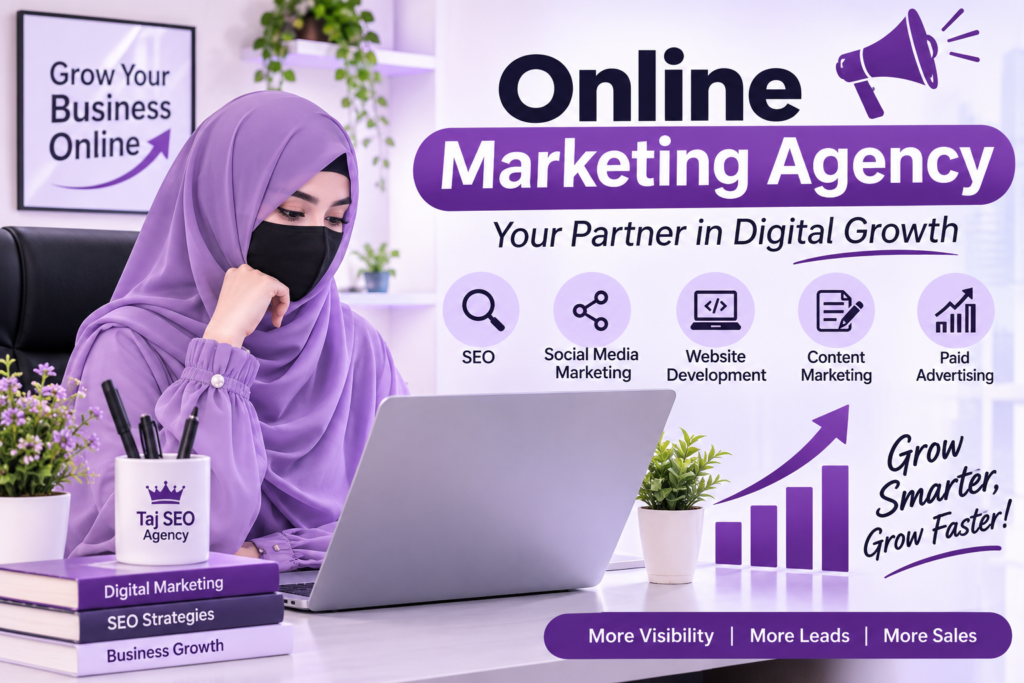
Suggested image alt text: Online marketing agency professionals working on digital marketing strategies.