
Most small business websites do not fail at SEO because of one big blunder. They stall because of a handful of common SEO mistakes that quietly add up: a page targeting no clear keyword, a title tag left on default, a site that loads slowly on phones, a Google Business Profile nobody has touched in months. None of these mistakes looks serious on its own, but together they are usually enough to keep a business off page one.
Most of these mistakes are cheap to fix. This guide walks through the most common SEO mistakes we see in audits, why each one hurts, and the simple fix for each.
The Most Common SEO Mistakes We See in Audits
When we audit a small business website, the same problems show up again and again. They fall into five groups: keyword mistakes, technical mistakes, content mistakes, local mistakes, and measurement mistakes. Work through them in that order, because a technical problem that stops Google from reading your pages makes every other fix pointless.
Mistake 1: Targeting keywords nobody searches for
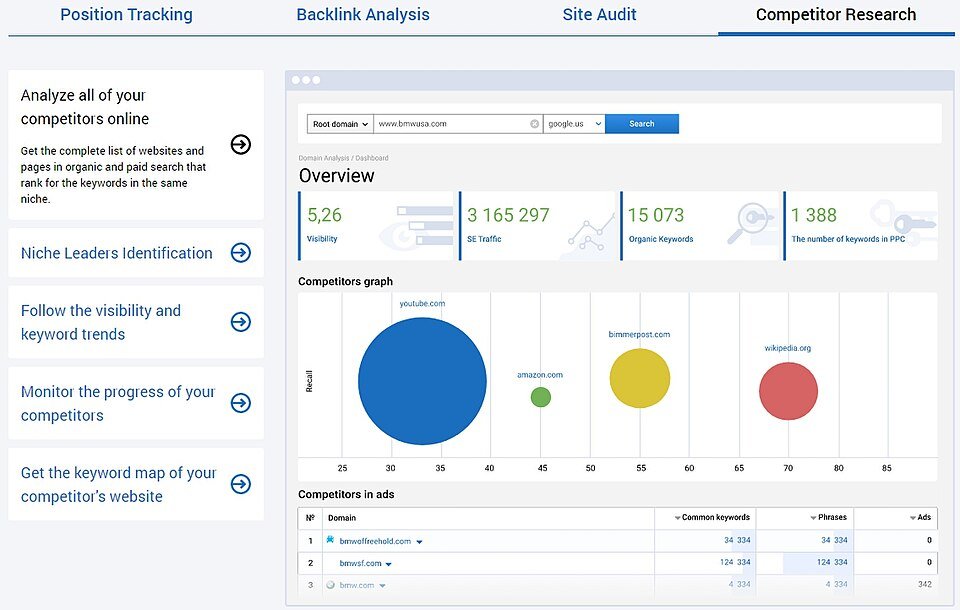
The single most expensive mistake is aiming at the wrong target. A plumber who optimises for “plumbing services” is competing with national directories. A plumber who optimises for “emergency plumber in Lahore” is competing with a handful of local businesses, and the searcher is ready to call. Before you write a word, check that real people search for your phrase and that the searchers are your customers. Pick phrases with clear buying intent over broad phrases with big volume. One page, one keyword, one searcher in mind. Our guide to keyword research explains how to build a short list of phrases worth targeting.
Mistake 2: Stuffing keywords into the copy
Keyword stuffing used to work twenty years ago. Today it reads badly and Google ignores it. If a service page repeats the same phrase in every sentence, visitors leave and rankings do not improve. Use the keyword once in the title, once in the first paragraph, and once or twice more where it fits naturally. Then write for the reader. A page that answers the question well will rank for dozens of related phrases you never deliberately targeted.
Mistake 3: Ignoring search intent
Ranking for a keyword is not enough if your page does not give searchers what they came for. Someone searching “how to fix a leaking tap” wants instructions, not a sales page. Someone searching “plumber near me” wants a phone number and a service area, not a 2,000-word essay.
Before writing, search the keyword yourself and look at what already ranks. If the top results are guides, write a guide. If they are service pages, build a service page. Matching the format of the pages Google already rewards is the fastest way to satisfy search intent. Our on-page SEO guide covers how to shape each page around the intent behind its keyword.
Mistake 4: A slow website, especially on phones

Most of your visitors arrive on a phone, and Google ranks the mobile version of your site. A page that takes six seconds to become usable loses a large share of visitors before it loads. The usual culprits are oversized images, a heavy theme, and too many tracking scripts. Run your important pages through PageSpeed Insights and read the mobile score, not the desktop one. Compress images before uploading them and remove plugins you do not use. Speed is one of the few ranking factors you can improve in an afternoon. For the full picture, read our guide to Core Web Vitals.
Mistake 5: Blocking Google by accident
This is the quietest and most damaging of the common SEO mistakes. A stray noindex tag, a robots.txt rule left over from development, or a staging site that went live with the wrong settings can hide your best pages from Google entirely. The site looks fine to you, but Google never sees it.
Check Google Search Console’s Pages report and look at the “not indexed” reasons. If important pages appear under “Excluded by noindex tag” or “Blocked by robots.txt”, fix the setting and request indexing. Run a full check with our website SEO audit guide at least once a year and after any redesign.
Mistake 6: Duplicate and thin content
Two pages saying the same thing in slightly different words split your ranking power between them, and Google will pick one, often the wrong one. Thin pages are worse: a service page with three sentences and a contact form gives Google nothing to rank and visitors nothing to trust. Give each service its own page with its own title, its own proof, and its own call to action. If two pages overlap, merge them and redirect the weaker one to the stronger one.
Mistake 7: No internal links between pages
Internal links are how Google discovers your pages and understands how they relate. A site with no internal links leaves important pages orphaned: nothing points to them, so crawlers rarely visit and visitors never find them.
Link from every new article to two or three older, related pages on your site, using descriptive anchor text that says what the linked page is about. Link from service pages to relevant blog posts and back again. This costs nothing, takes minutes, and is one of the highest-return habits in SEO. Our technical SEO guide explains how a clear site structure supports crawling and ranking.
Mistake 8: Neglecting the Google Business Profile
For any business that serves local customers, the Google Business Profile is often the first thing people see, and it is free. Yet most small businesses claim it once and never touch it again. Wrong categories, no photos, no posts in months, and unanswered reviews all cost local rankings and trust.
Claim the profile, complete every section, pick the most accurate primary category, add photos, and post an update at least once a month. Ask happy customers for reviews and reply to every review, including the bad ones. Our Google Business Profile optimisation guide walks through the ten steps that matter most.
Mistake 9: Inconsistent business details
If your business name, address, and phone number differ across your website, your Google Business Profile, and local directories, Google cannot be sure which version is correct, and neither can customers. Pick one exact version of your name, address, and phone number and use it everywhere, character for character. Fix the listings you control first, then the directories. A quick search for your business name plus your town will show you where the wrong versions live.
Mistake 10: Buying cheap links or ignoring links entirely
Bulk link packages from unrelated websites can do more harm than good, and Google is good at ignoring them or treating them as manipulation. At the other extreme, many small businesses never earn a single link, which leaves their authority flat. Earn links the slow way: publish genuinely useful content, get listed in real local directories, join local business groups, and ask suppliers and partners to link to you. Quality beats quantity by a wide margin. Our guide to off-page SEO and backlinks explains what a healthy link profile looks like.
Mistake 11: Not measuring anything
If you do not track results, you cannot tell which fixes worked and which were wasted effort. Many small businesses have no analytics at all, or analytics installed but never opened. Connect Google Search Console and Google Analytics, and check them once a month. Watch organic clicks, which pages bring them, and which search terms trigger your pages. That is enough to steer the next month’s work. Our guide on how to measure SEO ROI shows which seven metrics actually prove SEO is working.
How to Fix Common SEO Mistakes in the Right Order
Work in this order, because earlier items unblock later ones:
- Unblock Google first. Remove stray noindex tags and robots.txt blocks, and confirm your important pages are indexed.
- Fix speed and mobile. Compress images, remove heavy plugins, and test on a real phone.
- Give every page one clear keyword and matching intent. Rewrite weak title tags and meta descriptions.
- Merge thin and duplicate pages. One strong page beats three weak ones.
- Claim and complete your local presence. Google Business Profile, then consistent details everywhere.
- Add internal links. Connect new pages to old ones and service pages to related articles.
- Install tracking and give it time. Measure monthly, not daily, and judge SEO over three to six months.
Most small business sites can work through this list in a few weeks of spare hours. If a step needs a developer, hand them the specific finding rather than a vague request to “do SEO”.
Frequently Asked Questions
What is the most common SEO mistake small businesses make?
Targeting the wrong keywords, or no keyword at all. Most small business pages are written around what the owner wants to say, not what customers search for. Every page should target one phrase that real customers type into Google, with the buying intent to match.
Can I fix these common SEO mistakes myself?
Yes, for most of them. Keyword research, title tags, internal links, Google Business Profile updates, and image compression need no developer. Technical fixes such as redirects and server speed may need help, but a clear list of findings makes that help cheap.
How soon will fixing these mistakes help my rankings?
Some fixes show results in days: removing a noindex tag can bring a page back within a week. Most fixes take four to twelve weeks to show in rankings, because Google needs to recrawl, re-evaluate, and compare your pages against competitors. Judge SEO over months, not days.
Do I need to hire an SEO agency to fix these mistakes?
Not always. A small site with a willing owner can fix most of the mistakes in this guide alone. An agency earns its fee when the site is large, the fixes are technical, or the owner has no time. Either way, this checklist tells you exactly what needs doing, so you can judge any proposal against it.
Conclusion
Common SEO mistakes are rarely dramatic. They are small oversights, repeated across a whole website: the wrong keyword, the slow page, the missing link, the forgotten profile. The fix is equally undramatic — a checklist, worked through in order, a few hours a month. Start with the items that block Google, then the items that cost customers, and measure as you go. If you would like a professional audit of your own site, Taj SEO Agency can run through this same checklist for you and hand you the prioritised findings. The fundamentals behind this guide come from Google’s SEO starter guide.