
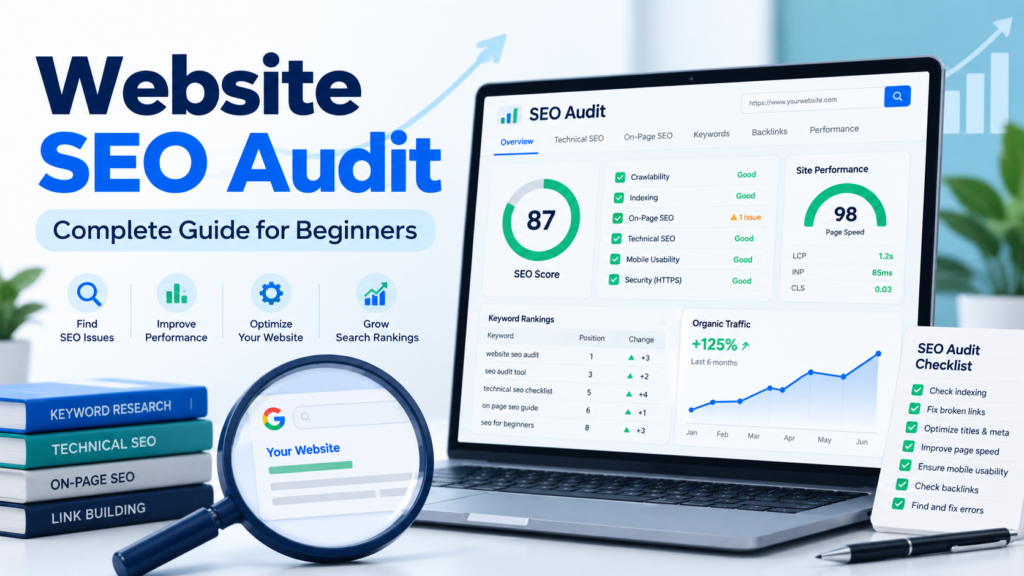
In today’s digital world, having a website is not enough to attract customers and grow an online business. A website needs to perform well in search engines, provide a smooth user experience, and follow modern SEO practices to achieve better visibility. This is where a website SEO audit becomes important.
A website SEO audit is a complete analysis of your website to identify problems, opportunities, and areas that need improvement. It helps businesses understand why their website may not be ranking properly on Google and what steps can be taken to improve organic traffic, rankings, and overall performance.
For beginners, SEO audits may seem complicated because they involve technical elements, content analysis, keywords, website structure, and user experience. However, understanding the basics of an SEO audit can help website owners make better decisions and build a stronger online presence.
At Taj SEO Agency, we help businesses analyze their websites, identify SEO issues, and implement effective strategies to improve search engine visibility and achieve long-term growth.
What is seo website audit?
A website SEO audit is a detailed evaluation of different SEO factors that affect a website’s performance on search engines. It checks whether a website follows Google’s guidelines and identifies issues that may prevent it from ranking higher.
Think of an SEO audit as a health checkup for your website. Just like a doctor examines your health to find problems, an SEO audit examines your website to discover technical errors, content weaknesses, ranking opportunities, and user experience problems.
A complete SEO audit usually covers areas such as technical SEO, on-page SEO, content quality, backlinks, website speed, mobile performance, and keyword optimization.
The main goal of an SEO audit is to create a clear roadmap for improving website performance and increasing organic search visibility.
Why it is Important Website SEO Audit?
Search engines constantly update their algorithms to provide users with better and more relevant results. A website that performs well today may lose rankings in the future if it does not follow modern SEO practices.
Regular SEO audits help businesses stay competitive by identifying issues before they negatively affect rankings.
An SEO audit helps you understand:
How search engines view your website
Which keywords are bringing traffic
Why some pages are not ranking
Which technical problems need fixing
How competitors are performing
What content improvements are required
Without an SEO audit, businesses often make random changes without knowing the real problems affecting their website.
Technical SEO Audit
Technical SEO is one of the most important parts of a website SEO audit. It focuses on the technical structure of a website and ensures that search engines can properly crawl, understand, and index web pages.
A technical SEO audit checks several important factors.
Website Speed and Performance
Website loading speed plays an important role in both rankings and user experience. Visitors expect websites to load quickly, and slow websites often experience higher bounce rates.
During an SEO audit, experts analyze:
Page loading time
Image optimization
Server performance
Code efficiency
Browser caching
Unnecessary scripts
Improving website speed helps create a better experience for users and can support stronger search engine performance.
Mobile-Friendliness
Most internet users browse websites through mobile devices. Google also uses mobile-first indexing, which means the mobile version of a website is considered important for ranking.
A website SEO audit checks whether the website:
Works properly on smartphones
Has readable text
Uses responsive design
Provides easy navigation
A mobile-friendly website improves user satisfaction and helps maintain better rankings.
Website Security
Website security is another important SEO factor. Search engines prefer secure websites that use HTTPS encryption.
An SEO audit checks whether:
The SSL certificate is active
The website is properly secured
There are no security warnings
A secure website builds trust with both users and search engines.
On-Page SEO Audit
On-page SEO focuses on optimizing individual website pages to improve their visibility in search results.
A proper on-page SEO audit reviews elements that directly affect rankings.
Title Tags and Meta Descriptions
Title tags and meta descriptions help search engines understand the topic of a page. They also influence whether users click on your website in search results.
An SEO audit checks whether titles and descriptions:
Include target keywords naturally
Are unique for each page
Match search intent
Encourage users to click
Well-optimized titles can improve click-through rates and attract more visitors.
Keyword Optimization
Keywords are an important part of SEO because they connect users’ searches with website content.
During an SEO audit, keyword analysis helps identify:
Target keywords
Missing keyword opportunities
Keyword usage issues
Ranking improvements
A website should use keywords naturally without keyword stuffing. Search engines now focus more on content quality and user intent.
Content Quality Analysis
Content is one of the strongest ranking factors. Search engines prefer websites that provide valuable, accurate, and useful information.
A content audit evaluates:
Content depth
Originality
Keyword relevance
Readability
Updated information
A website with high-quality content has better opportunities to rank for competitive searches.
Website Structure and Internal Linking Audit
Website structure helps both users and search engines navigate through different pages.
A good website structure makes it easier for search engines to discover important pages.
An SEO audit reviews:
URL structure
Navigation system
Category organization
Internal links
Broken links
Internal linking helps distribute authority between pages and guides visitors toward important sections of the website.
For example, a blog article can link to a service page, helping users find more information while improving SEO value.
Backlink Analysis
Backlinks are links from other websites pointing to your website. They are an important factor because they can indicate trust and authority.
However, not all backlinks are beneficial. Low-quality or spam backlinks can negatively affect website performance.
A backlink audit analyzes:
Number of backlinks
Quality of linking websites
Broken backlinks
Potential harmful links
Competitor backlink strategies
Building high-quality backlinks from relevant websites can improve domain authority and search visibility.
Competitor SEO Analysis
Understanding competitors is an important part of a website SEO audit.
A competitor analysis helps identify:
Which keywords competitors rank for
What type of content performs well
Where competitors get backlinks
What opportunities are missing
By studying competitors, businesses can create better strategies and discover new growth opportunities.
Local SEO Audit
For businesses targeting specific locations, local SEO is extremely important.
A local SEO audit checks:
Google Business Profile optimization
Business information accuracy
Local keywords
Customer reviews
Location-based content
Local SEO helps businesses appear in searches made by customers near their location.
For example, a local service provider can improve visibility when users search for services in their area.
Common SEO Problems Found During Audits
Many websites have similar SEO issues that prevent them from achieving better rankings.
Some common problems include:
Slow website speed
Missing meta titles
Duplicate content
Poor keyword targeting
Broken links
Poor mobile experience
Missing internal links
Low-quality backlinks
Unoptimized images
An SEO audit helps identify these problems and provides clear solutions.
Tools Used for Website SEO Audits
SEO professionals use different tools to analyze websites and collect important data.
Common SEO audit tools include:
Google Search Console
Google Analytics
Google PageSpeed Insights
SEMrush
Ahrefs
Screaming Frog
These tools provide information about rankings, traffic, technical errors, keywords, and website performance.
However, tools only provide data. Proper analysis and strategy are required to turn that data into meaningful improvements.
How Often Should You Perform an SEO Audit?
The frequency of SEO audits depends on website size, industry competition, and how often changes are made.
Generally, businesses should perform SEO audits regularly to identify new issues and opportunities.
An SEO audit is recommended:
When launching a new website
After major website changes
When rankings drop
Before starting an SEO campaign
Every few months for ongoing improvement
Regular audits help maintain strong SEO performance and prevent small problems from becoming major issues.
How Taj SEO Agency Helps With Website SEO Audits
A professional SEO audit requires experience, proper tools, and knowledge of search engine guidelines.
At Taj SEO Agency, we analyze websites from different SEO perspectives, including technical performance, keyword opportunities, content quality, website structure, and user experience.
Our approach focuses on identifying real problems and creating practical strategies that help businesses improve their online visibility.
A detailed SEO audit provides businesses with a clear understanding of their website’s current performance and the steps required for future growth.
Final Thoughts
A website SEO audit is an essential process for anyone who wants to improve their online presence. It helps identify hidden issues, discover ranking opportunities, and create a clear SEO improvement plan.
For beginners, an SEO audit may seem technical, but understanding its basic concepts can help website owners make smarter decisions. A well-optimized website requires continuous monitoring, quality content, technical improvements, and a strong SEO strategy.
By regularly analyzing and improving your website, you can increase search visibility, attract more organic visitors, and build a stronger digital presence.
Working with an experienced SEO partner like Taj SEO Agency can help businesses understand their SEO challenges and implement effective solutions for long-term online success.